Navi Mumbai
08048038864
+919833642402

'raw materials'

Items tagged with 'raw materials'

6814772a5d263414004dd4a4 Card 2

product image
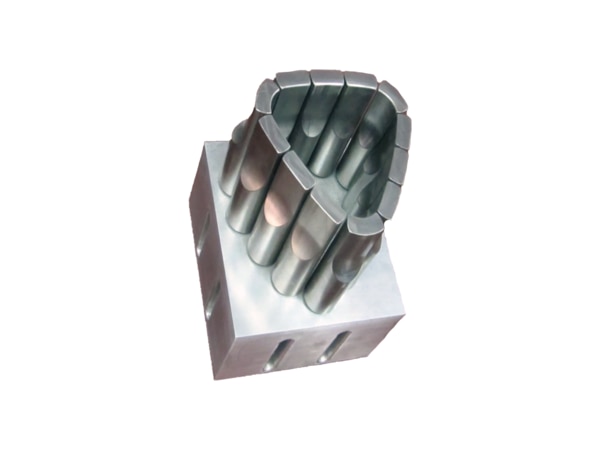
Ultrasonics Horns & Fixtures

Depending on the application, we offer full wave and half wave ULTRASONIC HORNS made of steel, aluminium, and titanium alloys. We create horns for ultrasonic machines of any brand that operate at 15 kHz, 20 kHz, 30 kHz, 35 kHz, and 40 kHz. Depending on the application, titanium and aerospace-grade aluminium horns can have hard coatings applied for longer life. We provide a broad range of COMPOSITE HORNS to our customers at market-beating costs. To weld intricate parts, these products are required. Our product line is created at our cutting-edge facility using high-quality raw materials. Before being shipped, these products are quality-tested by our quality auditors and made in accordance with international quality standards. Our selection of ultrasonic fixtures is made from high-quality raw materials. These goods are crucial to the process of ultrasonic welding. According to the various applications of our customers, we provide fixtures in aluminium, steel, epoxy, nylon, and PU. The variety of our products is thought to make it simple to load and unload parts during production.

6814772a5d263414004dd4a4 Card 2

product image
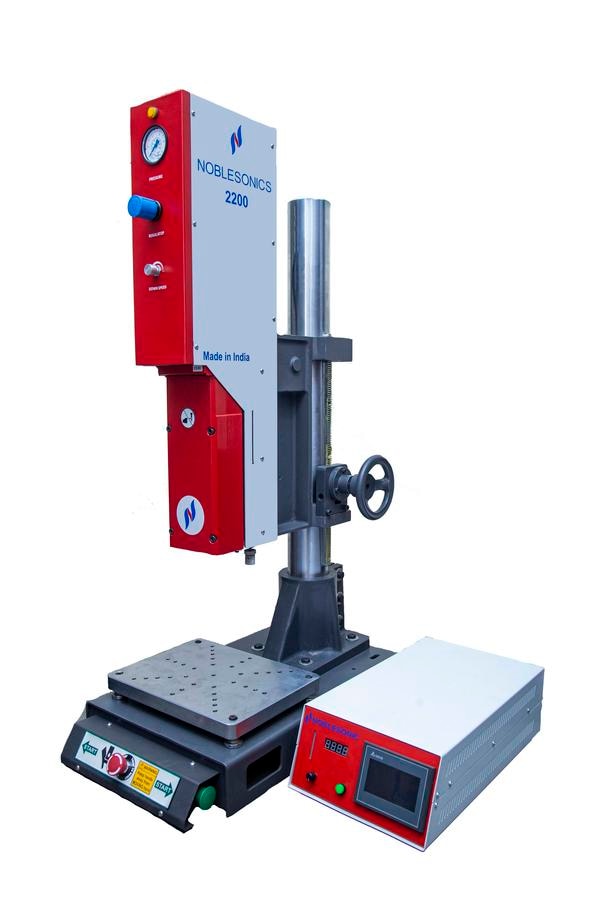
Ultrasonics Plastic Welding Machine

Ultrasonic welding (USW) is a welding technique that uses ultrasonic vibrations of high frequency to weld the two pieces together. It is most commonly used to weld thermoplastic materials and dissimilar materials. A high frequency (15 kHz to 40 kHz) ultrasonic vibration is used to join two plastic pieces together. The high-frequency vibration generates heat energy at the interface of the two pieces and melts the material. The melted materials fused with each other to form a strong weld on cooling and solidification. The typical frequency used is 15, 20, 30, 35 or 40 kHz.

6814772a5d263414004dd4a4 Card 2

product image
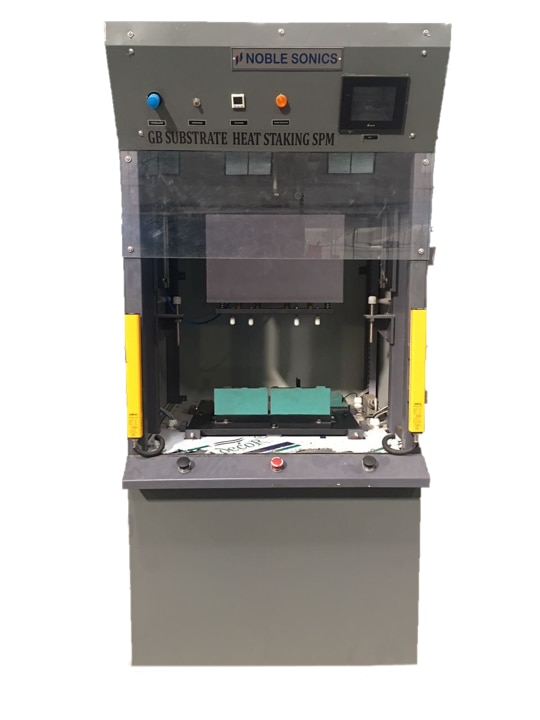
Special Purpose Machines

Heat Staking is a joining technology used to join two or more parts, at least one of which is made of plastic. The process uses heat and force to melt and deform the plastic material over a set period of time. The heated plunger with a defined profile cavity descends on the plastic stud. To achieve the desired profile, force is applied to the stud. It is used to join dissimilar materials and large parts, such as car door trims, air ducts, and the instrument panel in a car.

Still searching for
raw materials?